
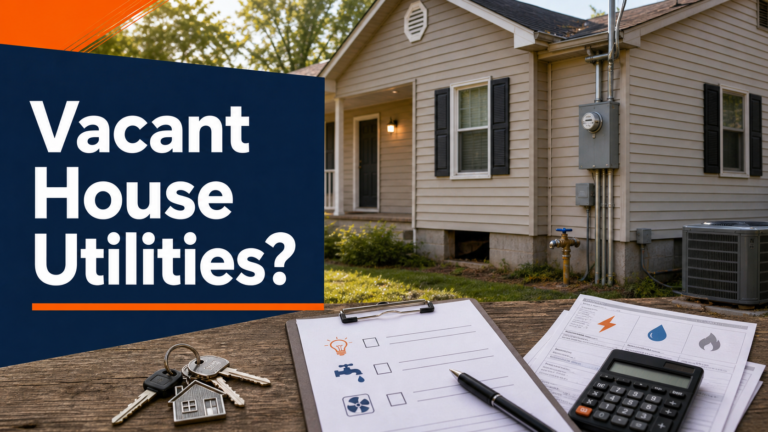
Do Not Treat Utilities As One Decision
When a house sits vacant, many owners ask one broad question:
Should I keep the utilities on?
That question sounds simple, but it usually hides several smaller decisions. Electricity, water, gas, HVAC, security lighting, appliances, and inspection access do not carry the same risk. They also do not create the same value.
A vacant house in Little Rock, North Little Rock, Conway, Benton, Bryant, Sherwood, Maumelle, Jacksonville, Cabot, Hot Springs, or another Central Arkansas market may need a different utility plan depending on:
- whether the house is safe to enter
- whether there are active leaks
- whether HVAC is working
- whether the house will be listed traditionally
- whether a buyer or inspector needs to test systems
- whether the property is insured as vacant or unoccupied
- whether anyone is checking the house regularly
- how long the owner expects to hold it
If the broader question is whether the house is worth holding, repairing, listing, or selling as-is, start with Paranova's guide to selling a vacant or unwanted house in Central Arkansas. This article focuses only on the utility decision before and during the selling process.
The Utility Stack
A useful way to think about utilities is as a stack.
Start at the top. Do not skip to the monthly bill before you know whether the house is safe.
- Safety
- Water risk
- HVAC and moisture control
- Showing and inspection needs
- Security and exterior appearance
- Carrying cost
- Sale path
If safety is questionable, that comes first. If there is an active water leak, that comes before whether a buyer may want to test the dishwasher. If the house is going to sit through a humid Arkansas summer, HVAC and moisture may matter more than a normal owner expects. If the house will not be shown traditionally because it needs too much work, keeping every service on may not create much value.
The right answer is usually not "all on" or "all off." It is deciding what each utility is doing for the house.
Electricity: Usually Useful, But Not Always Safe
Electricity can help a vacant house in several ways.
It may support:
- lights for showings
- HVAC or dehumidification
- a refrigerator or appliance that is still in use
- a security system
- cameras or internet equipment
- a sump pump or other equipment
- outlet and system testing during inspection
That does not mean electricity should always stay on.
If the house has damaged wiring, signs of fire damage, exposed electrical components, water intrusion near electrical systems, or unknown modifications, safety matters more than convenience. In that situation, an electrician, utility provider, inspector, contractor, or other qualified professional may need to review the issue before anyone assumes the power should stay active.
For a house that is reasonably stable and will be shown to buyers, electricity is often the utility that creates the most practical value. Buyers can see rooms clearly, inspectors can test outlets, HVAC can run if it is safe, and the house does not feel as neglected.
For a house that is unsafe, heavily damaged, or being sold directly as-is without normal showings, electricity may be less important. The decision depends on the condition and the sale plan.
Water: The Utility That Can Create The Fastest Damage
Water deserves its own decision.
Electricity can create risk, but water can quietly damage floors, cabinets, ceilings, crawlspaces, walls, and personal property if a leak runs unnoticed.
Water may be useful when:
- plumbing needs to be tested
- toilets and sinks still need to function during cleanup
- a traditional buyer or inspector needs normal access
- the house is occupied part-time while belongings are removed
- the owner is actively maintaining the property
Water may be risky when:
- nobody is checking the house
- there are known plumbing leaks
- pipes are old, damaged, or poorly winterized
- the water heater is questionable
- appliance supply lines are still connected
- the house has past moisture or flood issues
- freezing weather is possible and the house is not heated or monitored
If the house already has water damage, do not make the utility decision in isolation. Read Paranova's guide to selling a house with water damage in Arkansas and think through whether more holding time could make the problem worse.
For some vacant houses, the practical answer is to keep water on only while the house is actively being cleaned, shown, inspected, or repaired. For others, shutting off the water at the meter or main shutoff may reduce risk. If you are unsure how to do that safely, ask the utility provider, plumber, or another qualified professional.
Gas: Do Not Guess
Gas is not a place to improvise.
Some Arkansas houses use gas for heat, water heaters, fireplaces, stoves, or other appliances. If gas service is active and the house is vacant, make sure someone understands what is connected, what is working, and whether there are safety concerns.
Gas may matter if:
- the furnace uses gas
- the water heater uses gas
- a buyer or inspector needs to test systems
- the house needs heat during cold weather
- appliances are still connected
Gas may need professional attention if:
- there is any odor or suspected leak
- appliances are damaged or disconnected
- the house had fire, storm, or water damage
- the system has not been used in a long time
- nobody knows what is still connected
If there is any safety concern, stop and contact the utility provider or a qualified professional. The selling decision can wait. Safety comes first.
HVAC: Comfort Is Not The Main Issue
In a vacant house, HVAC is not mainly about comfort. It is about condition.
Central Arkansas heat and humidity can make moisture control matter, especially in houses with crawlspaces, past leaks, poor ventilation, older windows, or belongings still inside. In colder weather, heat may also matter if active water lines could freeze.
Leaving HVAC on may help:
- reduce humidity
- protect certain materials and belongings
- support showings
- make inspections easier
- reduce some freeze-related concerns when water is active
But HVAC is not free. It can also be risky if the system is old, damaged, short cycling, leaking, or running without anyone checking the house.
This is where the utility stack helps. If the house is stable, monitored, insured appropriately, and being prepared for a normal listing, HVAC may support the sale. If the house has major repairs, no clear listing plan, and nobody is checking it, HVAC bills may simply become another carrying cost.
Utilities Can Affect Buyer Confidence
Utilities also affect how buyers interpret a vacant house.
When electricity, water, gas, or HVAC are off, buyers may wonder:
- Do the systems work?
- Were utilities shut off because of damage?
- Is the seller hiding a problem?
- Will the inspection be limited?
- Will financing be harder?
- How much risk am I taking?
That does not mean utilities must always be on. It means the seller should understand the tradeoff.
A retail buyer using financing may care more about active utilities because inspections, appraisals, and lender expectations can be more sensitive. An investor or direct as-is buyer may be more comfortable evaluating a house with limited utilities, especially if the seller is clear about the condition and the property is priced around the risk.
If your goal is to create the broadest traditional-buyer pool, active utilities can help when they are safe. If your goal is to avoid more spending, avoid repairs, and sell the house as-is, you may not need to make the property feel fully show-ready.
Utilities Can Also Affect Security And Code Risk
A dark, unmanaged house can look vacant quickly.
That does not mean you need to run every utility. But basic lighting, exterior appearance, and regular checks can matter. The City of Little Rock's Code Enforcement Division lists issues such as trash, high grass and weeds, overgrown lots, illegal dumping, graffiti, vacant unsecured residential structures, and dilapidated structures as concerns it investigates.
Utilities are only one part of that picture.
If the yard is maintained, mail is picked up, doors and windows are secure, and someone checks the house, the property is less likely to look abandoned. If lights are always off, grass is tall, notices pile up, and a window is broken, the house may attract the wrong kind of attention even if the utility bill is low.
For a broader checklist, read Paranova's guide to securing a vacant property in Arkansas before a cash sale.
Insurance Should Be A Separate Call
Do not assume your normal homeowners policy treats a vacant house the same way it treated an occupied house.
American Family Insurance explains that homeowners should understand how a vacant or unoccupied house is covered and lists steps such as checking insurance, maintaining the exterior, protecting pipes, using timers or lighting, and having someone inspect the property. The exact answer depends on your policy, insurer, timeline, and facts.
That is why the utility decision should include an insurance call.
Ask your agent:
- Is the house considered vacant or unoccupied?
- Does the current policy still apply?
- Are water damage, theft, vandalism, fire, and liability covered?
- Does the policy require heat, water shutoff, regular inspections, or other steps?
- Does the mortgage company have separate requirements?
- Is a vacant-home policy or endorsement needed?
This article is general information, not insurance advice. Get the answer from the people who actually control the policy.
When Keeping Utilities On May Make Sense
Keeping some utilities on may make sense when:
- the house is safe enough to enter
- the property will be listed traditionally
- buyers and inspectors need to test systems
- HVAC is needed for moisture or freeze control
- the house has a security system, cameras, or lighting
- someone is checking the property regularly
- the insurance policy or lender expects certain conditions
- the monthly cost is manageable and tied to a clear sale plan
In that situation, utilities are not just expenses. They support the sale process.
The key phrase is "clear sale plan." If utilities are helping you get through cleanup, photos, showings, inspections, or closing, they may be doing real work.
When Turning Some Utilities Off May Make Sense
Turning off one or more utilities may make sense when:
- there is an active leak
- plumbing is damaged
- electrical safety is questionable
- gas safety is unknown
- the house will not be shown traditionally
- nobody can check the property
- the owner cannot keep paying monthly bills
- the house needs major repairs and systems are already assumed uncertain
- the seller is choosing a direct as-is sale where the buyer will evaluate the risk
The important point is to avoid lazy decisions.
Do not leave water on just because it has always been on. Do not shut off power just because the bill is annoying. Make each utility decision based on the house, the season, the risk, the sale path, and who is watching the property.
The Carrying-Cost Test
Utilities are usually only one part of the monthly cost.
A vacant house may also carry:
- mortgage payments
- property taxes
- insurance
- utilities
- lawn care
- security or monitoring
- repairs
- cleanup
- city notices or code-pressure costs
- travel time for out-of-town owners
- family coordination time
That is why the better question is not only "Can I afford this month's utility bill?"
The better question is:
What am I paying each month to keep this house in the same undecided state?
If utilities are supporting a sale plan, that cost may be reasonable. If they are only buying more delay, it may be time to compare options.
For many sellers, the decision is not between perfect repair and doing nothing. It is between:
- holding the house longer
- cleaning and repairing enough to list
- listing as-is
- renting it
- selling directly as-is
Paranova's article on selling a vacant house in Little Rock explains that broader decision if the utility bills are just one part of a bigger vacant-house problem.
What To Check Before Asking For An Offer
Before asking a buyer, realtor, contractor, or investor for help, gather what you can safely gather:
- Which utilities are active?
- Are any utilities disconnected?
- Are there active leaks?
- Does the HVAC work?
- Is there gas service?
- Is the house safe to enter?
- Is someone checking it?
- Is insurance still in place?
- Are there code notices?
- Are there repair issues that affect the utility decision?
- Are you trying to list traditionally or sell as-is?
You do not need perfect answers before talking with Paranova. But these details help frame the offer and the timeline.
If utilities are off, say so. If water is shut off because of a leak, say that too. If the house is unsafe to enter, do not force access just to get more information.
How Paranova Can Help
Paranova Property Buyers works with Central Arkansas homeowners who own vacant, unwanted, repair-heavy, inherited, tenant-related, or hard-to-maintain houses.
For a vacant house, Andrew can help you compare the practical paths:
- keep holding it
- clean it out
- repair enough to list
- list it as-is
- sell directly as-is
If utilities are on, off, limited, or uncertain, that can be discussed during the walkthrough. Paranova does not need every house to be perfect, cleaned out, or fully show-ready before making an offer.
The goal is not to pressure you into one answer. It is to help you understand whether the monthly cost and risk of keeping the vacant house is still worth it.