
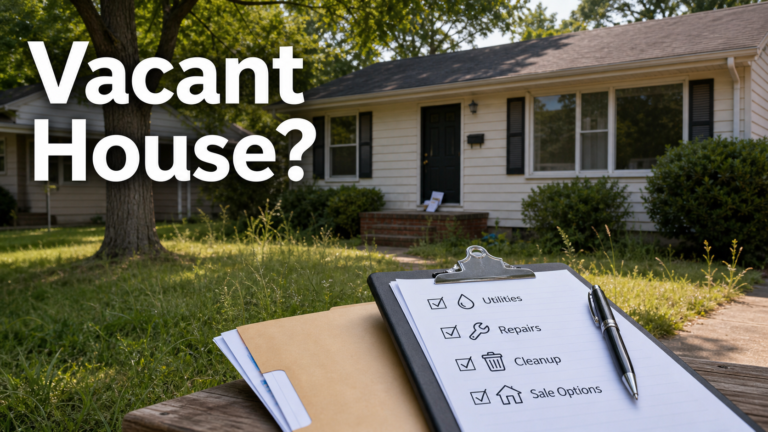
Why Vacant Houses Become Hard To Carry
A vacant house can feel quiet at first. There may not be a tenant calling, a family member living there, or a daily reminder that something needs to be done.
But the costs usually do not stop just because the house is empty.
The yard still grows. Utilities may need to stay on. Insurance can become more complicated. Small leaks, roof problems, broken windows, or plumbing issues can sit unnoticed. If the house already needs work, every extra month can make the decision feel heavier.
For many Little Rock homeowners, the hardest part is not one single repair. It is the whole list:
- What needs to be cleaned out?
- Is the house safe to show?
- Do repairs need to happen before listing?
- Will insurance cover a vacant property?
- Who is checking on it?
- What happens if the city sends a notice?
- How long can the owner keep paying for a house nobody is using?
That is when a vacant house can start to feel less like an asset and more like a problem to manage.
The practical issue is the stack, not one line item. A vacant house may have a manageable grass bill, a manageable utility bill, and a manageable repair list. Put them together with insurance questions, break-in risk, family stress, or an owner who lives out of town, and the decision changes.
That is why it helps to look at the property in layers:
- What does the house cost each month while it sits?
- What could get worse if nobody checks on it?
- What has to be fixed before a normal buyer or tenant would feel comfortable?
- What would a cleanout actually take?
- How much time do you realistically want to spend managing the property?
Your Main Options
There is not one right answer for every vacant house. The best path depends on the condition, the location, the mortgage or tax situation, and how much time and energy you want to put into the property.
Option 1: Keep The House
Keeping the house may make sense if the property is in solid condition, the carrying costs are manageable, and you have a clear plan for it.
That plan might be moving back in later, letting a family member use it, or holding it as a long-term rental. If you keep it, make sure someone is checking on the property regularly and that your insurance company knows the home is vacant.
Option 2: Repair It And List It
If the house is in a strong area and the repairs are manageable, fixing it before listing may help you reach more retail buyers.
The tradeoff is time, money, and coordination. You may need contractors, cleanup, utilities, lawn care, staging, and repeated access for showings. If the house has been empty for a while, there may also be issues you do not find until work begins.
This route can be worth it, but it is not simple for everyone.
Option 3: Rent It Out
Renting can work if the property is safe, functional, and likely to produce enough income after repairs, taxes, insurance, and maintenance.
The big question is whether you actually want to become a landlord. If the house is already wearing you down, renting it may solve one problem while creating another.
Option 4: Sell The House As-Is
An as-is sale may make sense when you want to avoid repairs, cleaning, showings, or months of uncertainty.
Selling as-is does not mean the house has no value. It means the buyer understands the current condition and makes an offer based on what is there now.
For a vacant house, that can matter because the owner may not want to:
- Clean out everything left behind
- Repair roof, plumbing, foundation, or electrical issues
- Keep paying utilities and insurance
- Coordinate contractors from out of town
- Wait through a traditional listing process
- Keep worrying about the house sitting empty
The tradeoff is that an as-is buyer has to account for repairs and risk. A traditional listing may bring a higher top-line price if the house is retail-ready, but it may also require more work before you get there.
The First Decision Is Control, Not Price
Most owners start with the obvious question: "What is the vacant house worth?"
That matters, but it is not always the first useful question. The first useful question is whether you can still control the property without the situation getting away from you.
Control means:
- someone can access the house when needed
- utilities and insurance are understood
- the yard and exterior are not creating attention
- the property is not attracting damage or unwanted activity
- cleanup and repairs have a realistic plan
- family members or co-owners agree on the next step
- the monthly cost is not quietly draining the owner
If you still have control, you may have more time to compare options. If control is slipping, waiting for the perfect sale path can become expensive.
A Simple Vacant-House Decision Framework
Before choosing a path, sort the house into one of three groups.
Stable And Marketable
The house is empty, but it is clean, safe, insured, and mostly ready to show. In this case, listing with an agent may be worth comparing because the vacant status is not the main problem.
Vacant With Work Needed
The house is empty and needs repairs, cleaning, yard work, or updates before most retail buyers would feel comfortable. This is where the owner should compare the cost of preparing the house with the likely net after listing.
Vacant And Becoming A Problem
The house is empty, hard to monitor, expensive to carry, or attracting concern. Maybe there are old belongings, deferred repairs, family stress, or a code notice. In this group, an as-is sale may be more useful because the owner is trying to reduce risk and management burden, not just chase the highest possible listing price.
This framework keeps the decision honest. A vacant house is not automatically a bad house. But vacancy changes how fast small issues can turn into bigger ones.
What To Watch Out For With A Vacant House
If the property is empty, a few things are worth checking sooner rather than later.
Insurance
Some insurance policies treat vacant homes differently. If the house has been empty for a certain amount of time, coverage can change. It is worth calling your insurance agent so you know what is actually covered.
Utilities
Turning utilities off may save money, but it can also create problems depending on the season and condition of the house. Plumbing, HVAC, and moisture issues can get worse if nobody is monitoring the property.
Security
Vacant houses can attract attention. Even small signs of neglect, like tall grass or mail piling up, can make the house look abandoned.
Cleanup
Many vacant houses still have furniture, trash, old belongings, or items left by previous occupants. Cleanup can become one of the biggest emotional and practical blockers, especially after an inherited property or a rental situation.
City Or Code Issues
If the grass, exterior, or structure becomes a concern, the city may send notices or require action. It is easier to deal with those issues early than after they pile up.
Little Rock-Specific Practical Concerns
Little Rock vacant houses can look very different depending on the neighborhood, age, and condition of the property. An older house near the city core may have different repair and security concerns than a newer suburban property. A rental that just became vacant may have different problems than an inherited house that has been sitting for months.
The local practical questions are usually:
- Is the house visibly empty from the street?
- Is anyone checking for leaks, broken windows, or HVAC issues?
- Is the yard making the property look abandoned?
- Are utilities on, off, or only partly active?
- Is there personal property inside that would slow down a sale?
- Would a financed buyer likely ask for repairs before closing?
These details matter because the best sale path depends on the actual condition, not just the fact that the house is vacant.
How Paranova Can Help
Paranova Property Buyers helps Central Arkansas homeowners understand their options when a house has become a problem.
If you have a vacant house in Little Rock and you are not sure whether to repair it, list it, rent it, or sell it as-is, Andrew can talk through the situation with you. If selling as-is makes sense, Paranova can look at the property in its current condition and make a private offer.
That means you do not have to repair the house first. You do not have to clean everything out before a conversation. And you do not have to decide anything before understanding your options.
For some owners, listing is still the better route. For others, a simple as-is sale is the cleaner path. The goal is to help you make a decision that fits the property and your life.
The useful next step is not to guess. It is to compare the real choices: keep carrying it, prepare it for the open market, rent it, or sell it directly as-is.
Local Note
In Little Rock and Central Arkansas, vacant homes can vary widely by neighborhood, age, condition, and repair needs. A house in good shape may only need basic cleanup and a listing plan. A house with deferred maintenance, old belongings, or safety concerns may need a different path.