
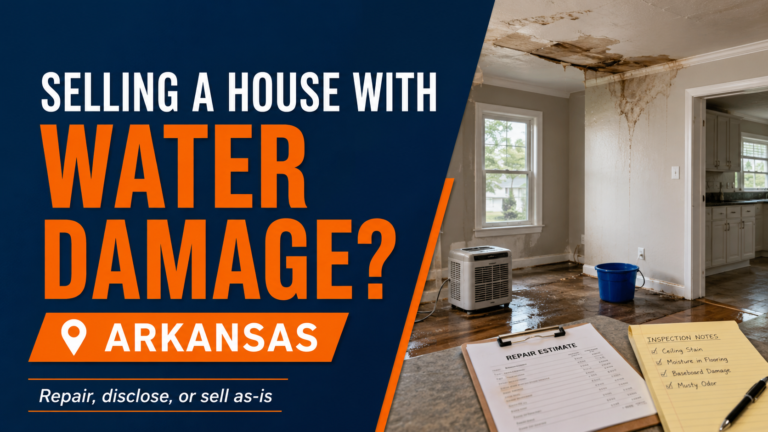
Why Water Damage Changes The Selling Conversation
Water damage makes buyers nervous because it can be hard to see the full problem right away.
A ceiling stain may point to an old roof leak. Soft flooring may hide a plumbing leak. A damp crawlspace may connect to drainage, foundation, termite, or mold concerns. A flooded room may look dry later but still leave damage behind walls, under flooring, or inside cabinets.
That is why water damage usually affects more than appearance. It can affect:
- repair cost
- buyer confidence
- inspections
- insurance questions
- appraisal and financing
- disclosure conversations
- sale price
- how long the house sits before closing
If the house also has other repair problems, this topic fits under selling a house with major repairs in Little Rock and Central Arkansas.
First, Identify The Type Of Water Damage
Not all water damage is the same.
Before deciding what to do, try to separate the problem into a few practical categories.
Active Leak
An active leak means water is still getting in. That may be from a roof, plumbing line, water heater, appliance, drain, window, crawlspace, foundation, or grading issue.
If the water source is still active, most buyers will see the risk as higher because the damage may still be spreading.
Old Damage
Old damage may come from a leak that was repaired months or years ago. The question becomes whether the damaged materials were repaired properly and whether any moisture or mold problem remains.
Documentation matters here. Photos, invoices, insurance paperwork, contractor notes, and inspection reports can help explain what happened.
Flood Or Storm Damage
Flood or storm damage can create a different conversation because the water may have affected flooring, drywall, insulation, electrical systems, HVAC, cabinets, crawlspace areas, or belongings.
If the damage came from flooding, documentation is especially important. FEMA recommends documenting damage and beginning cleanup when the property can be accessed safely, because delay can make mold and health concerns worse.
Hidden Moisture
Sometimes the biggest problem is not what you see. It is what remains wet behind the visible surface.
The EPA's mold guidance emphasizes quick response to water damage and notes that drying materials within 24 to 48 hours can help prevent mold growth. If water has been sitting longer than that, it may be worth asking a qualified contractor, inspector, or remediation professional what should be checked.
Do You Have To Fix Water Damage Before Selling?
Not always.
You generally have three paths:
- repair the damage before listing
- list the house as-is
- sell directly to an as-is buyer
The right answer depends on the severity, your budget, the rest of the house, and whether the property is likely to qualify for a normal buyer's financing.
Option 1: Repair The Water Damage Before Listing
Repairing first can make sense when the house is otherwise in good shape, the source of the water is clear, the repair cost is manageable, and the finished house is likely to sell well through a traditional listing.
This path may help if:
- the leak source is fixed
- damaged materials can be repaired cleanly
- there is no ongoing mold or moisture concern
- you have the money and time to manage contractors
- the repair is likely to increase buyer confidence
- the house will still be easy to insure and finance
The downside is uncertainty. Water damage can uncover more work once repairs begin. A small ceiling stain may lead to roof repairs. A soft floor may point to subfloor damage. A bathroom leak may involve tile, drywall, framing, or plumbing. A crawlspace issue may overlap with drainage or foundation concerns.
Before choosing this path, compare the expected repair cost with the likely net result after the sale.
Option 2: List The House As-Is
You can ask an agent about listing the house as-is. That usually means you are not planning to make repairs before closing, although buyers may still inspect, negotiate, ask for credits, or walk away.
Listing as-is can work when the location is strong, the damage is limited, or the price clearly accounts for the condition.
The challenge is buyer financing. A buyer may want the house, but the lender, appraiser, insurer, or inspector may raise concerns if the water damage affects safety, habitability, structure, or health.
Buyers may ask:
- Is the leak fixed?
- Was there mold?
- Did insurance cover the damage?
- Are there receipts or reports?
- Was drywall or flooring replaced?
- Is the crawlspace dry?
- Will the seller reduce the price?
If you are comfortable answering those questions and waiting through the inspection process, listing may be worth comparing.
Option 3: Sell Directly As-Is
A direct as-is sale may make sense when you do not want to repair the water damage, manage contractors, clean out the property, or keep paying holding costs while the house waits for a buyer.
An as-is buyer still has to account for the condition. Water damage affects value. But the process can be simpler because the buyer is looking at the property with the repair risk already in mind.
This path may fit when:
- the source of the water damage is uncertain
- the house has mold or moisture concerns
- repairs are too expensive
- the property is vacant
- you live out of town
- the house has other major repairs too
- buyer financing may be difficult
- you want fewer showings and less back-and-forth
This is similar to selling a house in poor condition in Arkansas. The question is not only what the house could be worth after repairs. The question is which path leaves you with the most realistic net outcome.
Mold, Moisture, And Health Questions
Water damage and mold are often discussed together, but they are not always the same thing.
A house can have water damage without visible mold. It can also have hidden moisture or mold behind walls, under flooring, in a crawlspace, or around insulation.
The EPA and FEMA both emphasize prompt cleanup and documentation after water damage, especially after flooding. If mold is suspected, it is usually wise to ask the right professional before disturbing materials or making assumptions.
If mold is already part of the sale concern, read our separate guide on selling a house with a mold problem in Arkansas.
Disclosure And Documentation Questions
If you know about water damage, do not hide it.
Disclosure practices can depend on the sale type, contract, agency relationship, listing process, and professional guidance. The Arkansas Real Estate Commission has explained that Arkansas does not require property condition disclosure by every seller, but many residential transactions still include seller disclosure, and buyers may request a disclosure form as part of an offer.
That is why the practical answer is simple: talk with your agent, title company, attorney, or closing professional about what should be disclosed and how.
Helpful documents may include:
- photos of the damage
- repair invoices
- roof or plumbing records
- insurance claim information
- remediation reports
- inspection reports
- contractor estimates
- moisture or mold testing notes
- receipts from cleanup or repairs
You do not need every document before asking Paranova a question. But if you already have them, they can make the conversation clearer.
Water Damage Can Affect More Than One Repair Category
Water damage often connects to other issues in the house.
For example:
- roof leaks can affect ceilings, insulation, framing, and electrical fixtures
- plumbing leaks can affect cabinets, flooring, walls, and subflooring
- crawlspace moisture can affect wood framing, flooring, air quality, and foundation areas
- storm damage can involve roofing, siding, windows, trees, and interior leaks
- long-term leaks can create mold, odor, stains, and buyer mistrust
If the house also has movement, cracks, or drainage problems, see our guide on selling a house with foundation problems as-is in Arkansas.
If the condition has created city notices, unsafe areas, or habitability concerns, the issue may also overlap with selling a house with code violations in Arkansas.
The Net Number Matters More Than The Repair Estimate
A repair estimate matters, but it is not the full decision.
Before spending money, compare:
- repair cost
- cleanup cost
- mold or remediation cost
- inspection risk
- buyer financing risk
- agent commissions
- seller concessions
- insurance, utilities, taxes, and lawn care while waiting
- time away from work or family
- stress of managing contractors
If the repair estimate is $12,000, the real question is not only whether the house can be repaired. The real question is whether repairing first leaves you better off after time, risk, and closing costs.
That is where comparing an as-is offer can help. It gives you another number beside the repair-and-list path. If you want to understand that side more generally, read how cash offers are usually calculated.
When An As-Is Sale May Make Sense
An as-is sale may be worth considering when the water damage is part of a larger property problem.
It may fit if:
- the leak source is not fully known
- the repair scope keeps growing
- the house is vacant or hard to maintain
- the damage is visible enough to scare normal buyers
- the house may not qualify for normal financing
- cleanup or belongings are still in the way
- you do not want repeated showings
- you need a simpler private sale
Paranova Property Buyers helps Central Arkansas homeowners understand their options when a house has become a problem. If your house has water damage in Little Rock, Pulaski County, Saline County, Conway, Benton, Bryant, Sherwood, Maumelle, Jacksonville, or nearby Central Arkansas, Andrew can look at the property as-is and talk through whether a fair cash offer makes sense.
You do not have to repair every damaged area before starting the conversation.
What To Gather Before You Decide
If you are comparing repair, listing, or selling as-is, try to gather:
- photos of the water damage
- the likely source of the water
- any repair estimates
- insurance claim information, if available
- inspection reports
- roof, plumbing, HVAC, or remediation invoices
- mold or moisture testing notes, if any
- utility and insurance costs
- mortgage or lien information
- title or probate documents, if ownership is complicated
If you do not have all of that, that is okay. Start with what you know and avoid guessing about the parts you cannot confirm yet.
The Bottom Line
Selling a house with water damage in Arkansas is possible, but the best path depends on the severity, source, repair cost, disclosure questions, buyer financing, and your tolerance for delay.
Repairing first may work if the house is otherwise strong and the repair is clear. Listing as-is may work if buyers understand the condition and financing can still close. Selling directly as-is may make sense if you want to avoid repairs, cleanup, repeated showings, and uncertain buyer requirements.
The goal is not to rush. It is to compare the real options before water damage turns into a bigger decision than it needs to be.