Safety Note
This article is general information for Arkansas homeowners. It is not insurance, legal, engineering, health, tax, or financial advice. If the property may be unsafe, wait for the fire department, building official, insurer, adjuster, contractor, engineer, or other qualified professional to tell you what is safe and appropriate.
Fire Damage Is Not Just Another Repair Problem
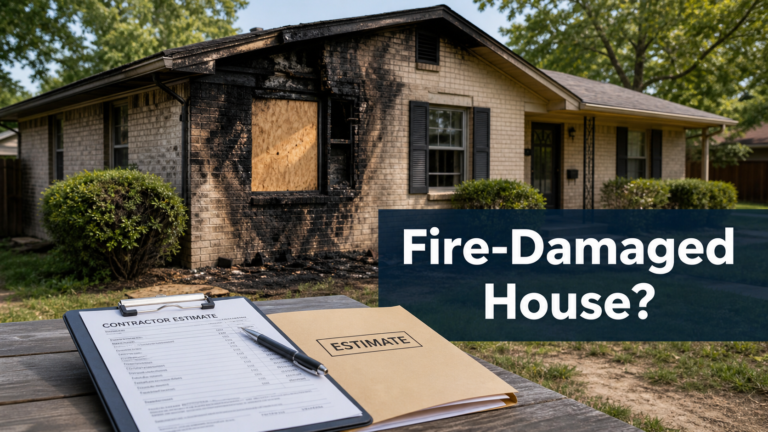
A fire-damaged house is not just a house that needs repairs. It may have smoke, soot, water from firefighting, electrical concerns, HVAC contamination, structural questions, code issues, insurance paperwork, and buyer financing problems layered together. The right path depends on how much you know, how much work you can manage, and whether the likely repaired sale price is worth the time, cost, and risk.
When a house needs a roof, foundation work, plumbing, or cosmetic repairs, the decision is usually about cost, time, and buyer confidence.
Fire damage adds a different kind of uncertainty.
Even when the flames were limited to one room, the rest of the house may have smoke odor, soot residue, wet insulation, damaged drywall, warped flooring, affected wiring, or HVAC ducts that carried smoke through the property. If firefighters used water to stop the fire, the house may also have water-damage problems that grow worse if the property stays humid, open to the weather, or without power.
That is why this topic belongs under selling a house with major repairs in Little Rock and Central Arkansas, but it needs its own decision framework. Fire damage often creates a sequence problem:
- Is the house safe to enter?
- Has the damage been documented?
- Has insurance had a chance to review it?
- Is the property secured from weather, theft, or vandalism?
- Is the repair scope known, or is everyone guessing?
- Could a normal buyer get financing?
- Would repairs actually produce a better net outcome?
If those questions are mixed together, it is easy to either rush into repairs or freeze because the situation feels too big.
First: Safety, Documentation, And Claim Scope
Before comparing sale options, slow the decision down into the first three steps.
1. Confirm Whether The House Is Safe To Enter
Do not enter a fire-damaged house just because the flames are out. The American Red Cross advises homeowners to pay attention to fire department or building-inspector instructions before going back inside. If a sign has been posted or a building official has restricted access, follow that process.
There may be electrical hazards, weak floors, damaged stairs, broken glass, smoke residue, air-quality concerns, unstable ceilings, or hidden structural issues. If you need documents or belongings, ask what is safe before walking through the property.
2. Document Before Cleaning Out
It is natural to want to throw damaged items away immediately. In many cases, documentation matters first.
The Red Cross also recommends not discarding damaged goods until an inventory has been taken. The U.S. Fire Administration points homeowners toward after-fire recovery steps that include insurance considerations, valuing property, replacing documents, and salvage decisions.
Practical documentation may include:
- photos and videos from each accessible room
- closeups of damaged areas
- a list of damaged personal property
- receipts for emergency lodging, board-up, or temporary repairs
- fire report information, if available
- insurance claim numbers and adjuster notes
- contractor or restoration estimates
- utility status and access restrictions
You are not documenting because you must repair. You are documenting so you can compare options from a clearer place.
3. Understand The Insurance Posture
If there is homeowner insurance, contact the insurer early and ask what they need before cleanup, removal, or repair work begins. The Arkansas Insurance Department can be a consumer resource when Arkansas homeowners have insurance questions or claim concerns.
This does not mean you must wait forever before selling. It means you should know whether a claim exists, what is still being reviewed, whether emergency mitigation is covered, and whether any work could affect the claim. If there is a mortgage, also understand whether the lender has requirements around insurance proceeds or repairs.
Paranova cannot interpret your policy or tell you how to handle a claim. But from a selling-decision standpoint, claim status affects the math. A house with a clear repair scope and a house with unknown claim questions are two different conversations.
Why Fire Damage Gets Expensive Even When The Flames Were Limited
The visible burn area is only one part of the cost.
A small contained fire can still leave smoke odor throughout the house. Soot can settle into walls, ceilings, cabinets, flooring, insulation, and ductwork. Firefighters may have opened walls, ceilings, windows, or roof sections to control the fire. Water used to put the fire out can soak subflooring, drywall, trim, crawlspaces, or insulation.
In Central Arkansas, the water side matters. A boarded window, damaged roof edge, wet drywall, or house sitting closed up in humid weather can turn a fire repair into a fire-plus-water-plus-mold concern. That does not mean every fire-damaged house has mold, but it does mean waiting can change the repair picture.
Fire damage can also trigger system questions:
- Was wiring exposed to heat or water?
- Did smoke move through the HVAC system?
- Does the roof or attic need structural review?
- Are gas lines, appliances, or electrical panels safe?
- Did the fire department or city require the property to be secured?
- Are permits or inspections needed before occupancy?
Little Rock Code Enforcement lists structures that have sustained fire damage among property-maintenance concerns and notes that unsafe residential structures can move into a condemnation process if they are declared unsafe. That does not mean every fire-damaged property is condemned, but it does show why a damaged, unsecured, or deteriorating house should not be ignored. The city’s overview is here: Little Rock Code Enforcement.
Four Realistic Paths After A House Fire
Most homeowners are choosing between four paths. The best answer depends on safety, insurance, money, time, and how much uncertainty you can handle.
Path 1: Pause, Stabilize, And Wait For Better Information
This is often the smartest first move when the fire just happened.
Stabilizing may include board-up, temporary weather protection, utility review, debris control, and securing the property. Waiting may also give the insurer, adjuster, fire department, building official, or contractor time to clarify what happened and what the property needs.
This path makes sense when:
- the house may be unsafe
- insurance review is still open
- you do not know the repair scope
- family members need time to recover and organize
- belongings, documents, or access issues are still being handled
The downside is that the house may keep costing money. Mortgage payments, insurance, utilities, yard care, security, taxes, and emergency work may continue while you wait.
Path 2: Repair First, Then List
Repairing first can preserve value if the claim is clear, the property is worth restoring, and you have the time and capacity to manage the work.
This may be the stronger path when:
- the house was otherwise in good condition
- insurance proceeds are enough to complete the repair
- the repair scope is clear
- you can manage contractors, permits, delays, and inspections
- the repaired house is likely to qualify for normal buyer financing
The risk is that fire repairs can expand. Once walls are opened, contractors may find water damage, electrical problems, framing concerns, smoke odor, or systems work that was not obvious at first. A repair path can be profitable, but it is not always simple.
Path 3: List The House As-Is
You can ask a real estate agent about listing the house as-is. This means you are telling buyers that you do not plan to make repairs, though buyers may still inspect, negotiate, ask for concessions, or walk away.
This can work if the house is in a strong location, the damage is limited, and there are buyers willing to take on the project. But the buyer pool may be smaller than it looks online.
Retail buyers often need financing. Lenders and appraisers may care about safety, habitability, utilities, structural condition, insurance, and repair completion. A buyer may like the house but still be unable to close with a normal loan if the damage is too severe.
Path 4: Compare A Direct As-Is Sale
A direct as-is sale can make sense when you do not want to repair, clean out, restore, list, or repeatedly explain the damage to buyers.
This path may fit when:
- the property is vacant or hard to secure
- you live out of town
- the house has fire damage plus other deferred repairs
- insurance will not cover enough to make repairs realistic
- the repair estimate keeps growing
- the house may not qualify for normal financing
- you want fewer showings and a simpler decision
Selling directly as-is does not make the damage disappear. The damage still affects value. But it can reduce the number of steps between where the house is now and a finished sale.
The Decision Math: Compare Four Numbers
Before choosing a path, compare four numbers as honestly as you can.
1. A Credible As-Is Offer
This is not the same as a perfect repaired value. It is what a real buyer would pay for the house in its current condition, with the fire damage, cleanup, risk, and repair scope included.
2. Likely Insurance Proceeds And Repair Estimate
If insurance is involved, understand what is known and what is still uncertain. Are proceeds approved, disputed, delayed, or tied to repair completion? Is the contractor estimate complete, or is it only a first look?
3. Realistic Repaired Listing Net
Look beyond the expected list price. Subtract repair costs, cleanup, staging, commissions, concessions, taxes, utilities, insurance, security, and the time it may take to finish the work and close with a buyer.
4. Carrying, Security, And Stress Costs
A fire-damaged house can be expensive to hold. Board-up, utilities, lawn care, vandalism risk, insurance questions, weather exposure, trips to the property, contractor calls, and family stress all count.
The repair path may still win. But it should win after the full comparison, not because the list price looked higher on paper.
What Normal Buyers And Lenders May Worry About
Fire-damaged houses create questions that normal buyers may not know how to answer.
They may worry about:
- hidden smoke or soot damage
- odor returning after cleaning
- water damage from firefighting
- electrical safety
- HVAC contamination
- permits and inspections
- whether insurance will cover the house
- whether a lender will approve the loan
- whether the repair estimate is complete
That uncertainty can lead to lower offers, repeated inspections, financing delays, repair demands, or canceled contracts. If you list as-is, expect buyers to ask for documentation. If you sell directly as-is, expect the buyer to price the uncertainty into the offer.
This is similar to selling a house with water damage in Arkansas and selling a house with code violations in Arkansas, but fire damage often includes both problems at once.
When Not To Sell Immediately
Sometimes the right move is to pause before taking any offer.
Do not rush the sale decision if:
- the house has not been cleared for safe access
- you have not documented the damage
- your insurer has asked you not to remove or discard items yet
- you do not know whether emergency mitigation is needed
- a family member, co-owner, estate, lender, or attorney must be involved
- you are too early in the process to compare options clearly
Pausing does not mean committing to repairs. It means protecting your ability to make a better decision.
What To Gather Before Asking For An Offer
If you want to compare an as-is sale, gather what you can without putting yourself at risk.
Helpful items include:
- the property address
- photos or video of the exterior and accessible interior areas
- the date and general location of the fire
- whether the house is safe to enter
- whether utilities are on, off, or restricted
- whether the property is boarded or secured
- insurance claim status, if any
- repair or restoration estimates, if available
- whether belongings remain inside
- mortgage payoff or lien information, if known
- who has authority to sell
You do not need a perfect file before having a conversation. But the more you know, the more useful the comparison will be.
How Paranova Can Help
Paranova Property Buyers works with Central Arkansas homeowners who are dealing with difficult, unwanted, or expensive houses. A fire-damaged property may be a fit if you want to compare a direct as-is sale before spending money on repairs, cleanup, or a traditional listing.
The conversation is meant to be practical. We can look at the house as it sits, discuss the damage we can see, account for the repairs and risk a buyer would take on, and give you a straightforward option to compare against repairing and listing.
That does not replace your insurer, adjuster, contractor, engineer, attorney, or city official. It simply gives you one more number and one more path while you decide what makes sense.
If the repair path is clearly better for you, that is useful to know. If the property has become too much to manage, an as-is sale may help you move forward without turning the next several months into a restoration project.