
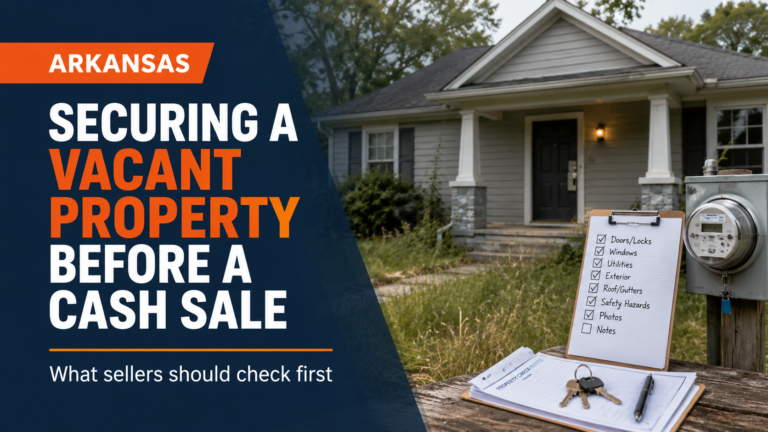
Why Vacant Houses Need A Different Plan
A vacant house can change quickly.
When nobody is living there, small problems are easier to miss. A broken window may stay open for days. A roof leak may become ceiling damage. A water heater issue may turn into flooring damage. Tall grass may make the house look neglected. A neighbor may notice activity before the owner does.
That does not mean you need to panic. It means the house needs a simple plan while you compare your options.
If the property is in Little Rock, North Little Rock, Conway, Benton, Bryant, Sherwood, Maumelle, Jacksonville, or another part of Central Arkansas, the main question is usually practical:
What has to be protected while you decide whether to keep it, repair it, list it, rent it, or sell it as-is?
If the bigger question is whether to sell at all, start with our page on how to sell a vacant or unwanted house in Central Arkansas.
Start With Access And Entry Points
The first thing to check is whether the house can be entered easily by someone who should not be there.
Walk the outside if it is safe to do so. Look for:
- unlocked doors
- broken windows
- loose crawlspace doors
- damaged garage doors
- side gates that no longer latch
- missing screens
- open sheds or outbuildings
- signs that someone has been inside
You do not need to make the house perfect. The goal is to reduce obvious access.
For some houses, that may mean changing locks, adding temporary door hardware, securing a crawlspace opening, closing a broken window, or asking a trusted person to check the property. For a house with serious damage or unsafe conditions, it may mean stepping back and asking a contractor, city official, insurance agent, or other professional what is safe to touch.
Keep The Exterior From Looking Abandoned
The outside of a vacant property sends a message.
Tall grass, piled mail, visible trash, broken blinds, open gates, or fallen limbs can make a property look unmanaged. That can attract attention, create neighbor complaints, or make a small maintenance issue feel larger.
In Little Rock, the city's Code Enforcement Division says it investigates issues such as trash, high grass and weeds, overgrown lots, illegal dumping, graffiti, vacant unsecured residential structures, and dilapidated structures. That does not mean every vacant house has a code problem. It does mean exterior neglect can become more than a cosmetic issue if it sits too long.
A simple exterior plan may include:
- mowing or basic yard care
- removing obvious trash from the porch or yard
- picking up mail and notices
- checking for broken windows
- keeping gates closed
- clearing limbs away from walkways
- asking a neighbor or family member to report obvious changes
If the house is already in rough shape, do not spend blindly. Compare the cost of cleanup and maintenance with the likely sale path before putting money into things that may not change the final decision.
Check Insurance Before Assuming You Are Covered
Vacant homes can create insurance surprises.
Insurance companies often treat occupied, unoccupied, and vacant houses differently. American Family Insurance notes that vacant property coverage can apply when a house is uninhabited, including situations where someone moved, inherited a home, or the home needs renovation. Its separate guide on protecting a vacant home also explains that a homeowners policy may not cover a property once it has been vacant for a given number of days.
The exact answer depends on your policy, insurer, timeline, and facts.
Before you decide to leave the house sitting, it is worth asking your insurance agent:
- Is the house considered vacant or unoccupied?
- Does the current policy still apply?
- Are theft, vandalism, water damage, or fire covered?
- Does someone need to inspect the house regularly?
- Should utilities stay on?
- Is vacant-home coverage needed?
This is not just paperwork. If something happens before closing, the wrong insurance assumption can turn into a real cost.
Be Careful With Utilities
Utilities are not always a simple yes-or-no decision.
Turning everything off may save money. But it can also create problems if the season, plumbing, HVAC, sump pump, refrigerator, dehumidifier, security system, or lighting still matters.
Leaving utilities on may help with:
- basic lighting
- HVAC or humidity control
- showing the property
- checking outlets and systems
- preventing certain weather-related problems
Turning utilities off may make sense when:
- the house is unsafe
- there are active leaks
- the electrical system is questionable
- the property will not be shown traditionally
- the cost is too high for the owner's situation
If there is known moisture, an active leak, or past flooding, read our guide on selling a house with water damage in Arkansas before assuming the house is fine because it looks dry today.
Document The Current Condition
Before repair people, family members, buyers, or cleanup crews start moving through the house, document what is there.
Take photos or videos of:
- exterior sides of the house
- roofline and gutters if visible from the ground
- doors and windows
- meter boxes and utility areas
- visible water stains
- flooring issues
- broken fixtures
- personal belongings left behind
- crawlspace or basement access points, if safe
- yard condition
- sheds, garages, and outbuildings
This helps you remember the condition, compare offers, answer buyer questions, and avoid confusion later.
It can also help if the house is inherited, tenant-damaged, or shared by multiple family members. People remember property condition differently, especially when the house has emotional history.
Decide What Not To Fix Yet
One of the easiest ways to waste money on a vacant house is fixing things before you know the sale path.
If you are listing with an agent, certain repairs, cleaning, utilities, and presentation work may help. If you are renting it, safety, habitability, and code compliance matter. If you are selling as-is to a direct buyer, some repairs may not be necessary.
Before spending money, separate repairs into three groups.
Safety And Active Damage
These are issues that may get worse quickly or create danger. Examples include active leaks, open electrical hazards, collapsing steps, broken glass, unsecured entry, or standing water.
Presentation Repairs
These make the house look better but may not change the underlying value much. Examples include paint, carpet, cosmetic landscaping, light fixtures, and deep cleaning.
Sale-Path Repairs
These only matter if you choose a certain path. A retail buyer's lender may care about one issue. A landlord may care about another. A cash buyer may price the repairs into the offer and let you skip them.
The right decision depends on what you are trying to accomplish.
If You Are Considering A Cash Sale
A cash sale does not mean the house can be ignored. It means the buyer may be willing to evaluate the property as it sits.
Before a walkthrough or offer conversation, it helps to gather:
- the property address
- ownership information
- mortgage or lien information, if known
- tax status, if known
- keys or access instructions
- photos of obvious issues
- notes about utilities
- insurance or claim information, if relevant
- repair estimates, if you already have them
- anything you know about tenants, belongings, or prior damage
You do not need to know every answer before starting a conversation. But the more organized the basics are, the easier it is to compare a cash offer with the cost of holding, repairing, cleaning, or listing.
When Securing The House Is Not Enough
Sometimes the property has moved beyond a simple checklist.
That may be true when:
- people have been entering the house without permission
- utilities are unsafe or disconnected
- there is major water damage
- mold or moisture is suspected
- the roof, foundation, or structure is failing
- there are code notices or neighbor complaints
- the house is full of belongings or trash
- ownership or probate questions are unresolved
- the owner is out of town and cannot manage it
In those situations, the best next step may be to compare paths instead of trying to personally solve every problem.
For some Central Arkansas homeowners, keeping the house makes sense. For others, repairing and listing makes sense. For others, selling as-is is the more practical route because the house has become too much to manage.
How Paranova Can Help
Paranova Property Buyers helps Central Arkansas homeowners understand their options when a house has become a problem.
If you have a vacant property in Little Rock, Pulaski County, Saline County, Conway, Benton, Bryant, Sherwood, Maumelle, Jacksonville, or nearby Central Arkansas, Andrew can look at the house as-is and talk through whether a fair cash offer makes sense.
You do not have to clean out every room first. You do not have to make every repair first. You also do not have to know whether a cash sale is the right answer before asking questions.
The goal is to compare the real options calmly, then decide what makes sense for the property, timeline, and situation.