
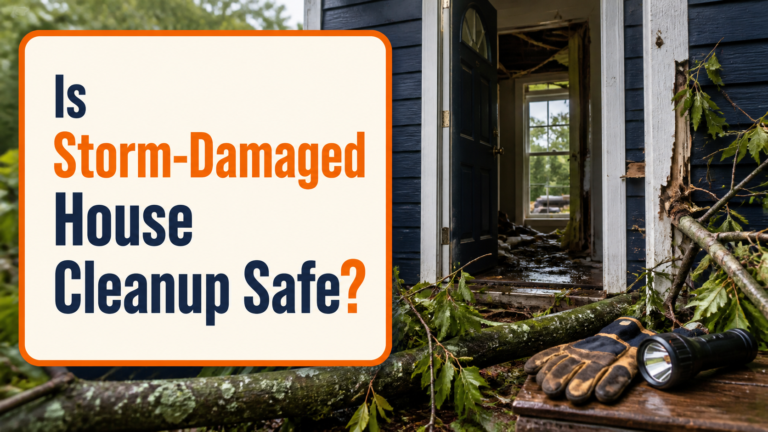
Safety Comes Before the Cleanout
After a tornado, severe storm, flood, or falling tree, owners often want to save belongings and stop further damage. The house may look stable from outside while the roof, floor, wiring, gas line, or interior air is unsafe.
The EPA advises people to wait for professional clearance before reentering a flooded home when structural, electrical, or other hazards may remain. Its flooded-home cleanup guidance also recommends documenting damage before cleanup and using protective equipment.
If anyone smells gas, sees sparking wires, hears shifting, or finds standing water near electrical equipment, leave the area and contact emergency services or the utility. Do not test the danger yourself.
Check These Hazards Before Entry
Structural movement
Look from a safe distance for a shifted foundation, leaning wall, sagging roof, broken truss, separated porch, cracked chimney, or tree resting on the structure. A building professional may need to decide whether entry is safe.
Electricity and gas
Downed service lines, wet panels, damaged appliances, and hidden wiring can remain energized. Gas leaks and damaged fuel systems can create fire or explosion risk. Let the utility or qualified professional control shutoff and reentry.
Floodwater and sewage
Floodwater may contain bacteria, chemicals, fuel, sewage, or sharp objects. Ordinary rainwater that entered through a roof is not the same as river or sewer water, but wet materials still need prompt drying.
Mold and indoor air
The EPA says wet materials should be dried as quickly as possible, often within 24 to 48 hours when it can be done safely. Mold can spread through porous materials and may affect people with asthma, allergies, or weakened immune systems. The EPA’s mold cleanup resources explain when a small cleanup differs from a larger contaminated area.
Debris and animals
Broken glass, nails, sharp metal, unstable furniture, damaged trees, insects, rodents, and displaced animals can turn a simple cleanout into an injury risk.
Generator exhaust
Fuel-powered generators create carbon monoxide. EPA guidance says to operate them outside and at least 20 feet from buildings, away from doors, windows, vents, and wet areas.
A Safe Order of Operations
- Keep people away from the property until immediate hazards are checked.
- Call emergency services or utilities for active danger.
- Contact the insurance company when coverage may apply.
- Photograph damage from safe locations before moving items.
- Confirm safe entry and utility conditions.
- Wear equipment suited to the actual hazard.
- Separate salvageable belongings from contaminated or destroyed materials.
- Remove water and wet materials only after the site is safe.
- Dry, clean, and repair before closing walls or restarting affected HVAC equipment.
Do not mix cleaning chemicals. The EPA specifically warns against mixing bleach with other products.
When to Hire Trained Help
Professional help is the safer choice when the house has structural movement, electrical or gas damage, sewage, broad mold growth, asbestos or lead concerns, large trees, heavy debris, biohazards, or rooms that cannot be entered safely. Children, older adults, people with breathing conditions, and people with weakened immune systems should not take part in contaminated cleanup.
An adjuster, structural professional, electrician, plumber, restoration company, mold professional, arborist, or hazardous-material specialist may each own a different part of the decision.
Decide Whether Cleanup Supports the Sale
Cleanup can protect belongings and help buyers understand the house, but a complete restoration is not always necessary before selling. Compare:
- Insurance requirements and available proceeds
- Cost and time for safe cleanup
- Repair scope after debris is removed
- Holding costs while the house remains vacant
- Expected net proceeds after repair
- As-is listing or direct-sale options
Paranova’s guide to selling a storm-damaged Arkansas house as-is explains how cleanup, insurance, repairs, and sale timing can interact.
If water entered the structure, the guide to selling a house with water damage explains why moisture mapping, mold risk, and hidden damage can change the plan. When cleanup reveals broader repair needs, compare that work with selling an unwanted or damaged house as-is.
How Paranova Can Help
Paranova can review a Central Arkansas storm-damaged house after safe access is established. A direct as-is offer may let the owner avoid managing every repair or cleanout task. It will not replace emergency, structural, environmental, insurance, or legal advice.
If the property is unsafe, Andrew can begin with photos and known facts instead of asking the owner to enter for a showing.
The Bottom Line
A storm cleanout is not safe merely because the weather has passed. Confirm the building, utilities, water, air, and access first. Preserve evidence, use the right protective help, and compare the cost and risk of cleanup with the sale routes available.