
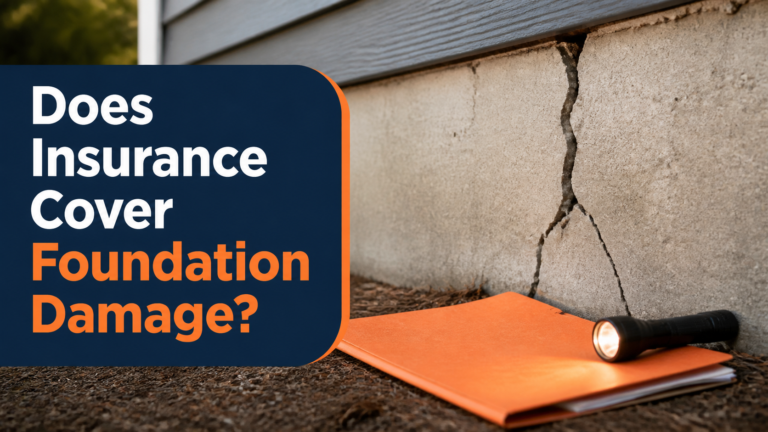
The Crack Is Not the Coverage Answer
Two houses can show the same wall crack and receive different insurance decisions. The visible damage is the result. The insurer looks for the cause and checks whether that cause is covered, excluded, or limited.
Possible causes include:
- plumbing water released suddenly
- long-term pipe leakage
- poor surface drainage
- shrinking or expanding soil
- ordinary settling
- tree roots
- construction or design problems
- fire or an impact
- flooding or earth movement
Do not tell the insurer what caused the problem unless a qualified person has identified it. Report what you observed, when you observed it, and any urgent step taken to prevent more damage.
Damage That May Be Covered
A policy may cover foundation damage that is part of a covered loss. For example, a sudden covered plumbing event may damage nearby building materials. Fire, an explosion, or a vehicle impact may also be covered causes under some policies.
Coverage can still be limited. A policy may cover resulting water damage but not the failed pipe, or may apply a separate deductible or endorsement. The declarations, policy form, exclusions, and endorsements all matter.
Damage Often Excluded
Many policies exclude or limit damage tied to settling, cracking, shrinking, expansion, earth movement, wear, deterioration, faulty construction, repeated seepage, or maintenance. Standard homeowners insurance also generally does not replace separate flood insurance.
“Foundation damage” is therefore too broad for a yes-or-no answer. Ask the insurer to identify the cause it accepted, the policy language it applied, the deductible, and which repair items are included or excluded.
The Arkansas Insurance Department offers consumer insurance help and can explain complaint options. It cannot rewrite the policy or guarantee payment.
What to Do When You Find a Problem
- Protect people from an unsafe area.
- Photograph the crack, floor movement, water, and nearby damage.
- Note the date, weather, plumbing event, and first signs.
- Stop active water when safe.
- Call the insurer promptly and follow notice requirements.
- Keep damaged materials unless removal is necessary for safety.
- Get the claim number and written coverage decision.
- Ask a qualified foundation or structural professional about the cause and repair scope.
Avoid permanent repairs before the insurer has a fair chance to inspect, unless emergency work is needed to prevent more damage. Keep every invoice and photograph.
Should You File a Claim?
Compare the likely covered amount with the deductible and the value of formal claim review. Ask how the insurer wants the loss reported. Do not hide a known problem when applying for insurance or selling the house.
An agent can help explain the policy, but only the insurer can make the claim decision. If the denial is unclear, request the reason and cited policy language in writing.
What If the Claim Is Denied?
A denial does not tell you whether the foundation must be repaired before sale. It means the insurer says the claimed loss is not payable under that policy decision.
The homeowner can ask for clarification, provide new cause evidence, use the insurer's review process, or seek professional advice. Separately, the owner can compare repairing, listing as-is, or selling directly.
Our guide to selling an Arkansas house with foundation problems as-is explains the sale side of the decision. A broader guide covers moisture, mold, and foundation repairs before selling.
Compare Repair and Sale Paths
For each path, write down:
- confirmed repair scope
- cash needed before sale
- expected sale price and net
- time and carrying costs
- inspection and renegotiation risk
- disclosure duties
- chance the plan fails
A repair may make sense when the cause is known, the scope is stable, funding is available, and the likely increase in net proceeds justifies the work. An as-is sale may fit when the problem is large, uncertain, uninsured, or beyond the owner's budget.
If selling, do not assume “as-is” means the issue can be hidden. Review what Arkansas sellers may need to disclose and share known reports and claim records with the proper professionals.
How Paranova Can Help
Paranova can inspect a foundation-damaged house in Little Rock or Central Arkansas and provide a written as-is offer. We cannot diagnose the structure, decide an insurance claim, or give legal advice. The offer is one option to compare with repair and listing estimates.
The Bottom Line
Insurance coverage follows the cause and policy, not the word “foundation.” Document the problem, get the insurer's decision in writing, identify the repair scope, and then compare the true cost and risk of repair, listing as-is, or selling directly.