
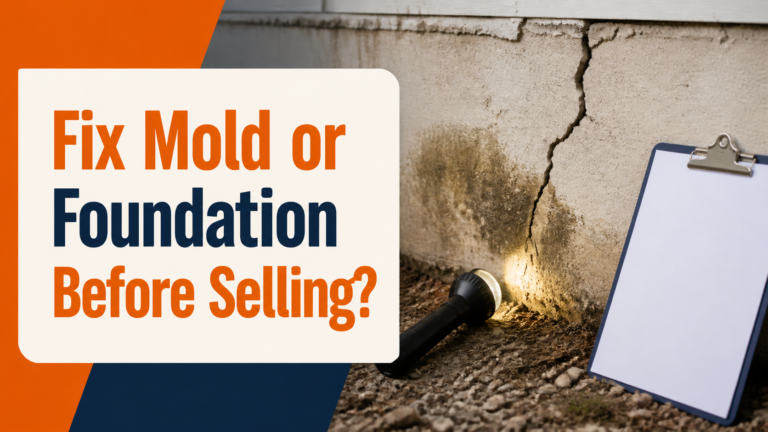
Start With the Facts That Control This Decision
The same question can have a different answer for two Arkansas homes. Start with the documents and dates that can change the outcome:
- Where water enters and whether it is still active
- Visible mold, odor, humidity, rot, cracks, movement, and drainage patterns
- Independent inspection or engineering findings
- Repair scope, warranty, permit, and realistic cost
- As-is value, repaired value, financing limits, and seller timing
Do not spend money, promise a closing date, or sign away a right based only on a rough online answer. Put the facts in one folder and mark anything that is still uncertain.
What the Rule Means in Practice
The EPA says moisture control is the key to mold control and recommends correcting leaks, humidity, and drainage. It also notes that ground should slope away from the foundation.
If the main issue is active leakage or past flooding, start with the choices for selling a water-damaged Arkansas house.
The practical goal is not to memorize every rule. It is to identify who controls the next decision, what proof that person needs, and the last safe date for acting. Ask for important answers in writing. Keep notes of the date, name, and exact instruction when you speak with a lender, court office, lawyer, title company, inspector, or public agency.
A Practical Order of Operations
- Protect people and stop urgent leaks or electrical hazards.
- Diagnose roof, plumbing, grading, gutter, crawl-space, and foundation causes before choosing a repair.
- Get written scopes that separate water control, cleanup, structural work, and cosmetic restoration.
- Compare repaired and as-is net proceeds, including time, overruns, carrying cost, and buyer risk.
When visible growth or odor is the central concern, the guide to selling a house with mold in Arkansas explains the condition and disclosure questions to separate from cleanup.
Work in that order unless a confirmed deadline requires faster legal help. This keeps a homeowner from solving an easy surface problem while a title, authority, loan, court, or timing issue quietly blocks the whole plan.
What Can Change the Answer
Watch for these common points of confusion:
- Painting over stains does not fix moisture.
- Mold can return when the water source remains.
- A foundation-sales proposal is not the same as an independent structural diagnosis.
- Large repairs can uncover additional work after they begin.
Pause when ownership, title, occupancy, financing, repair scope, or the closing deadline is uncertain. Resolve the fact that can stop closing before spending money on smaller details.
Compare the Real Choices
For each available path, write down five numbers or facts: expected net proceeds, cash needed before closing, time to complete, work required from the owner, and the cost if the plan fails. Use the same assumptions for every option.
If movement or structural repair drives the cost, compare the numbers for selling a house with foundation problems as-is.
A path with a higher possible price may still be weaker if it requires money the owner does not have, cooperation that is not available, or a deadline the property cannot meet. A faster path may be weaker if it leaves an important debt, legal, tax, title, or possession question unanswered. The best choice is the one that works with the actual constraint—not the one with the best headline.
A Proceed-or-Pause Check
You may be ready to proceed when the controlling documents agree, every required signer is identified, the numbers are current, the deadline is confirmed, and the people who must approve the plan have done so in writing.
Pause when a key fact is still assumed. A short pause to confirm authority, payoff, condition, notice, or contract terms can prevent a failed closing and a much larger delay.
How Paranova Can Help
Paranova Property Buyers can look at a Central Arkansas house in its present condition and explain the timing and terms of an as-is cash offer. That can give an owner one real number to compare with listing, repairing, holding, or another solution.
When several problems overlap, an as-is Arkansas sale may be one clean comparison against a large repair plan.
We cannot give legal or tax advice, decide a court matter, change a lender's rules, guarantee a program, or promise that every title issue can be solved. There is no pressure to accept an offer. The goal is to help you compare a clear option with the other paths available.
The Bottom Line
Before selling, first stop active water entry, unsafe conditions, and damage that is getting worse. Then diagnose the cause before paying for cosmetic mold cleanup or foundation work. Repair when the scope is clear and the likely added net proceeds justify the cost and delay. Sell as-is when uncertainty, access, money, or timing makes a major project a poor fit—while disclosing known facts honestly. Confirm the controlling facts first, then choose the path that fits the real deadline, cost, and level of certainty you need.